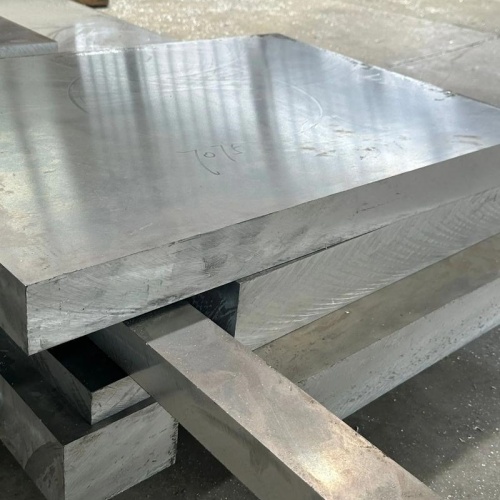
When selecting aluminum sheet for structural parts, marine accessories, fabrication or outdoor projects,
6061 and
5052 are the two most commonly compared alloys.
Many buyers and distributors ask the same question:
What are the real differences between 6061 and 5052 in strength, welding, and corrosion resistance?
1. Strength Comparison
5052 Aluminum
- Non-heat-treatable alloy
- Medium strength, good toughness
- Stable strength in most forming conditions
- Lower yield strength than 6061
- Ideal for general forming, tanks, and non-load-bearing parts
6061 Aluminum
- Heat-treatable alloy (T6 temper widely used)
- Significantly higher strength than 5052
- Better load-bearing capacity and rigidity
- Suitable for structural components, brackets, frames, and machined parts
- Preferred when strength and rigidity are priorities
Conclusion: 6061 is stronger; 5052 is softer and more formable.
2. Weldability Comparison
5052 Aluminum
- Excellent weldability among aluminum alloys
- Minimal strength loss after welding
- Rare cracking during welding
- Very popular for tanks, ship parts, and welded enclosures
6061 Aluminum
- Good weldability, but not as stable as 5052
- May lose some strength in welded zones
- Requires proper process control for best results
- Still widely used in welded structural assemblies
Conclusion: 5052 welds better and is more reliable for critical welded projects.
3. Corrosion Resistance Comparison
5052 Aluminum
- Outstanding corrosion resistance
- Performs very well in marine, coastal, and humid environments
- Highly resistant to salt spray and atmospheric corrosion
- Top choice for marine and outdoor uncoated applications
6061 Aluminum
- Good general corrosion resistance
- Suitable for outdoor and industrial environments
- Slightly lower than 5052 in saltwater and long-term outdoor exposure
- Often used with anodizing or coating for extra protection
Conclusion: 5052 has better corrosion resistance, especially in marine and high-humidity conditions.
4. Typical Applications
Best for 5052:
- Marine components and boat parts
- Storage tanks and pressure vessels
- Outdoor panels and uncoated parts
- General sheet metal forming
- Parts requiring superior welding
Best for 6061:
- Structural frames and supports
- Machined components
- Automotive and machinery parts
- Brackets, bases, and load-bearing parts
- Projects needing higher rigidity
5. Which One Should You Choose?
Choose 5052 if you need:
- Better corrosion resistance (marine, coastal, outdoor)
- Superior weldability
- Excellent formability
- Lower-cost general-purpose sheet
Choose 6061 if you need:
- Higher strength and rigidity
- Heat-treatable performance
- Structural load-bearing capacity
- Better machinability
Final Summary
- Strength: 6061 > 5052
- Weldability: 5052 > 6061
- Corrosion Resistance: 5052 > 6061
Both are reliable, industry-proven alloys. Your final choice depends on whether your project prioritizes strength, or welding and corrosion resistance.